
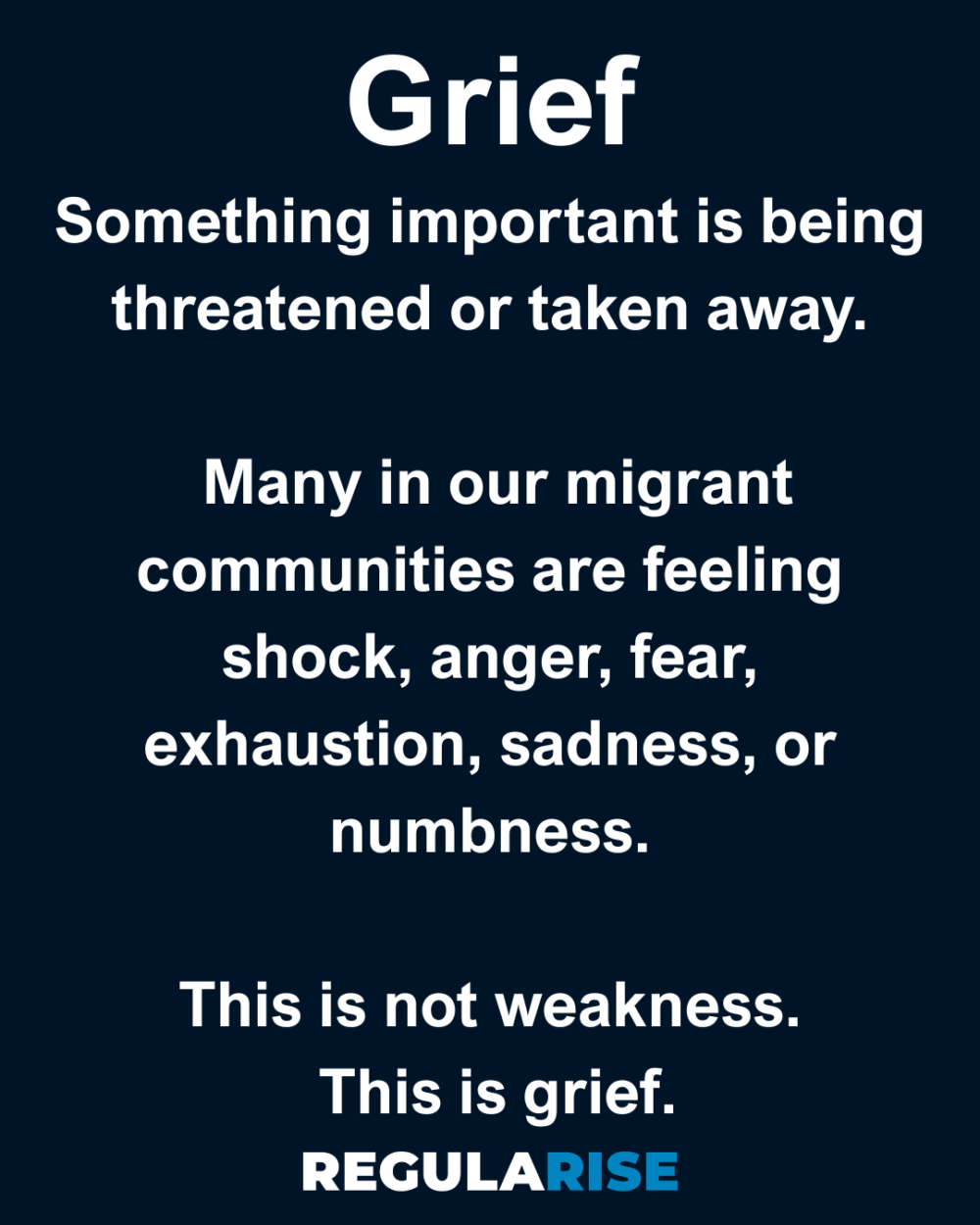
Something important is being threatened or taken away.
Many in our migrant communities are feeling shock, anger, fear, exhaustion, sadness, or numbness.
This is not weakness.
This is grief.
Grief isn’t only about death.
We grieve when we lose safety, stability, hope, rights, or a future we believed in.
Grief can look like: disbelief, anger, anxiety, restlessness, withdrawal, searching for answers, and feeling hopeless or overwhelmed.
All of these are human responses to loss, harm, and uncertainty.
For many migrants — especially those newly caught in the ever-expanding hostile environment — this moment is shocking and destabilising.
For others who have lived through previous policy changes, it can reopen long-held wounds and memories of both past and ongoing harms.
This is a painful moment for many.
Some of us are grieving for the first time.
Some of us are grieving again.
Some of us are holding space for others while carrying our own pain.
It’s a lot.
Grief is often nonlinear, cyclical, collective, and made heavier by uncertainty.
There is no “correct” way to feel right now.
In times like this, our strength is each other.
Let’s treat one another with care, assume pain not bad intent, and allow space for different reactions and ways of coping.
Many in our communities are already doing this — people in the same boat supporting one another.
We are not alone, even when we feel alone.
Grief can coexist with action, solidarity, and courage.
Our communities continue to resist & survive hostile policies.
We will continue to support each other, organise, campaign, and fight for our rights.
Rest when you need to.
Reach out when you can.
Stay connected.
We move through this together.
Repost on Instagram